Monday, March 20, 2006

Mom Said "No!"

I must admit that I am old enough to have been able to wear this jumpsuit during the Disco era 1970's. But there is no way my mother would have let me out of the house in this ultra-sexy jumpsuit by Mr. Boots.


The designer plays a trick by making the back of the jumpsuit look especially demure and plain. But turn around, and you'll have all the guys panting! The bare midriff is accented with criss-cross corset lacing that holds the front upper bodice in place over the breasts.


See this jumpsuit and more at Couture Allure Vintage Fashion .

Wednesday, March 15, 2006

Details Make the Difference

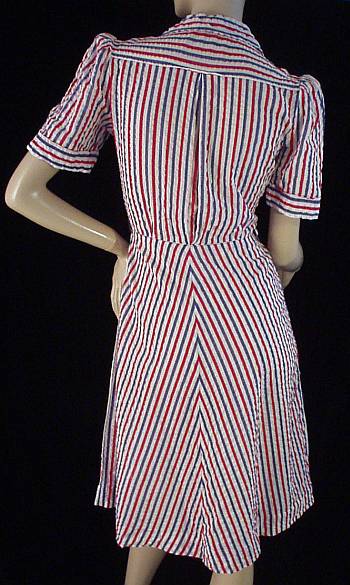
Details can make such a difference! This cute red, white, and blue stripe dress dates to the early 1940's. This is not a "designer" garment. It is an everyday dress that was probably purchased at a small town dress shop. But, even though it wasn't an expensive dress, take a look at the attention to detail in the construction.


The patch pockets are made from 3 separate pieces for visual interest by varying the direction of the stripes. The red, white, and blue circles of the buttons complement the stripes.


Also notice the attention given in matching the stripes at the center front and back seams of the skirt. If you sew, you know this is not easy to do. The pattern pieces must be cut and then sewn with great care to get the match exactly right. This type of matching is only found in the most expensive garments today, but was considered the norm back in the 40's!

See this dress and more at Couture Allure Vintage Fashion .

Sunday, March 5, 2006

Letting the Fabric Define the Design

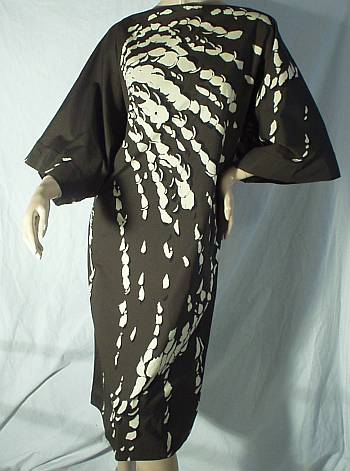
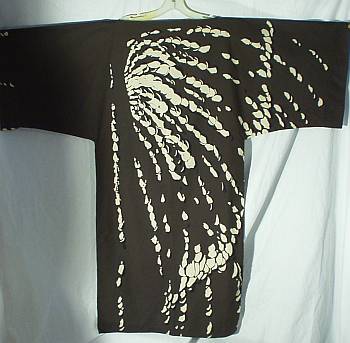
Sometimes the print of the fabric will dictate the design of the garment. Such is the case with this simple sheath dress by Krizia. This dress was designed in the 1980's and the straight silhouette with the boat neckline and kimono sleeves serves to set off the splashy print of the cotton fabric.


The clean straight lines of the dress with minimal seaming allows the textile to become the main focus here.

See this dress and more at Couture Allure Vintage Fashion .

Monday, February 27, 2006

Every Girl Deserves One


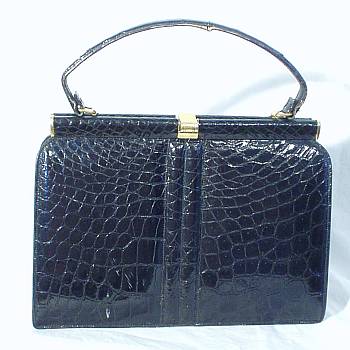
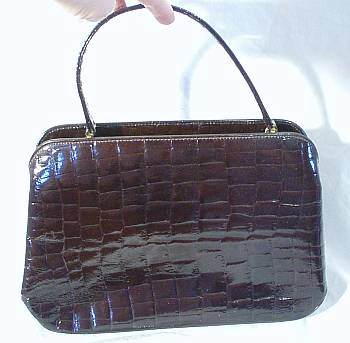
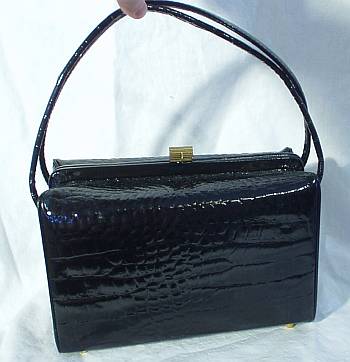
You can't call yourself a vintage girl until you have at least one alligator purse in your closet! There's nothing like the luxurious look of alligator, crocodile, or snakeskin to glam up your look.


And if you don't care for genuine skins, there are great vintage finds in embossed leather and vinyl to suit your taste.

See these purses and more at Couture Allure Vintage Fashion .

Friday, February 10, 2006

Pauline Trigere - Innovative American Designer

Pauline Trigere was one of America's finest and most important designers. She started her own line in 1942 and continued to design into the late 1980's. During that time she won the Coty American Fashion Critics Award four times, and was inducted into its Hall of Fame in 1959. In 1993, Trigère received the Lifetime Achievement Award from the Council of Fashion Designers of America.

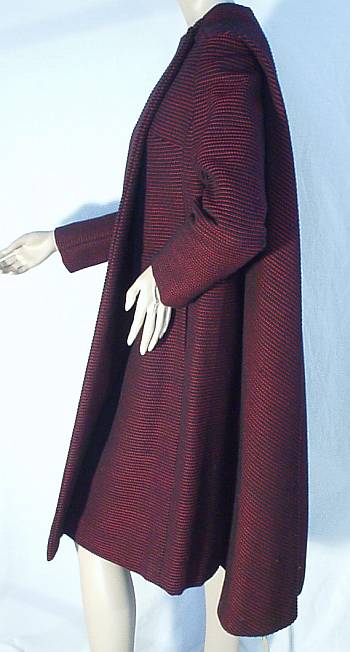
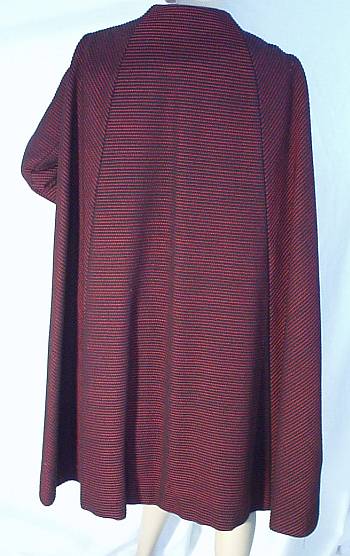
Trigere was known for her crisp, tailored cuts and innovative ideas, particularly with outerwear and this coat is a fine example. Dating to about 1963-64, this coat is fashioned from a heavy black wool accented with horizontal lines of red wool stitching.
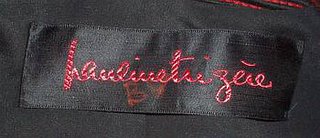
This coat is from the high end Pauline Trigere designer label, not the mid-range licensed line. The coat is very sculptural in its design and the wool is backed with stiff interfacing to hold the lines of the design.
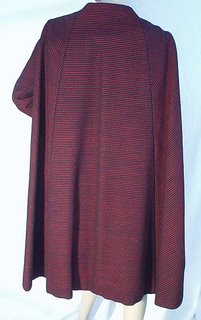
What makes this coat so innovative is the use of small tucks at the back of the shoulders which flare out to the hem and make the back look like a cape.
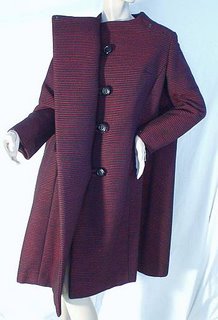
The button and loop closure is completely hidden behind an extended front closure that snaps at the neckline.

See this coat and more at Couture Allure Vintage Fashion .

Monday, February 6, 2006

Raised Daisies

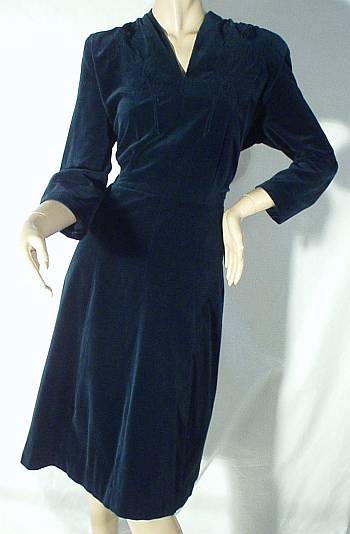
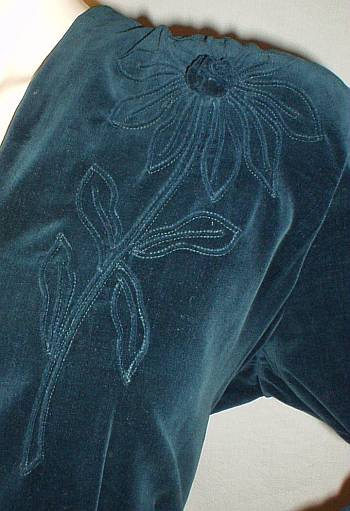
During the wartime 40's, the L-85 restrictions for garment manufacturing which the WPB (War Production Board) developed in the spring of 1942, had wide repercussions on the garment industry. The restrictions centered on the amounts of fabric to be used in individual garments. This is why we see shorter skirt lengths during the war years. Designers and garment manufacturers also had to become clever in their methods of adding visual interest to a dress.


The simple silhouette of this 1940's cotton velveteen dress is made whimsical with the addition of pintucks sewn in the shape of daisies on both sides of the bodice front. This decoration took no extra fabric, save for the small puffed center which is added on top. The pintucks are sewn with a double needle. The seamstress follows a design marked onto the fabric. The tension caused by a single bobbin thread working between the two top threads causes the fabric to raise into a pintuck between the needles. I just love the intricacies involved in the many curves and turns of these daisies.

See this dress and more at Couture Allure Vintage Fashion .

Wednesday, February 1, 2006

Making Do

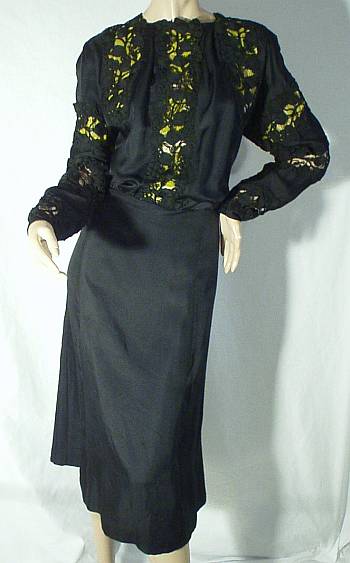
Women had to "make do" in the Depression era 30's and this dress is an example of one woman's ingenuity. I can imagine this woman needing a dress for a special event, yet not having the money to purchase the fabric needed to do so. She goes up to the attic and pulls out one of granny's Victorian dresses and makes it over to fit the current style.

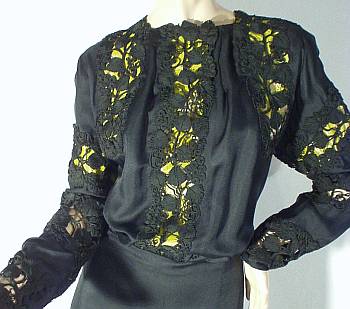
She uses the bodice with its elaborate passimentarie trim and cuts a modern skirt from the old silk twill Victorian one. Now that's what I call recycling!

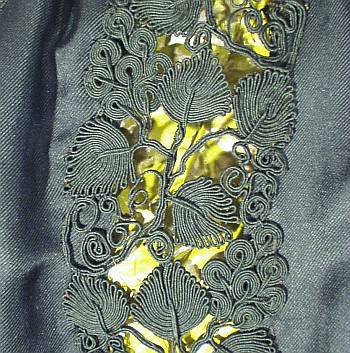
Take a closer look at that gorgeous passimentarie trim. It is completely constructed by hand from narrow flat soutache braid. The soutache is placed on its side and wound around and around to form this elaborate botanical design. It is backed with acid green silk taffeta to set it off in a distinctive way. Just beautiful!

Related Posts Plugin for WordPress, Blogger...